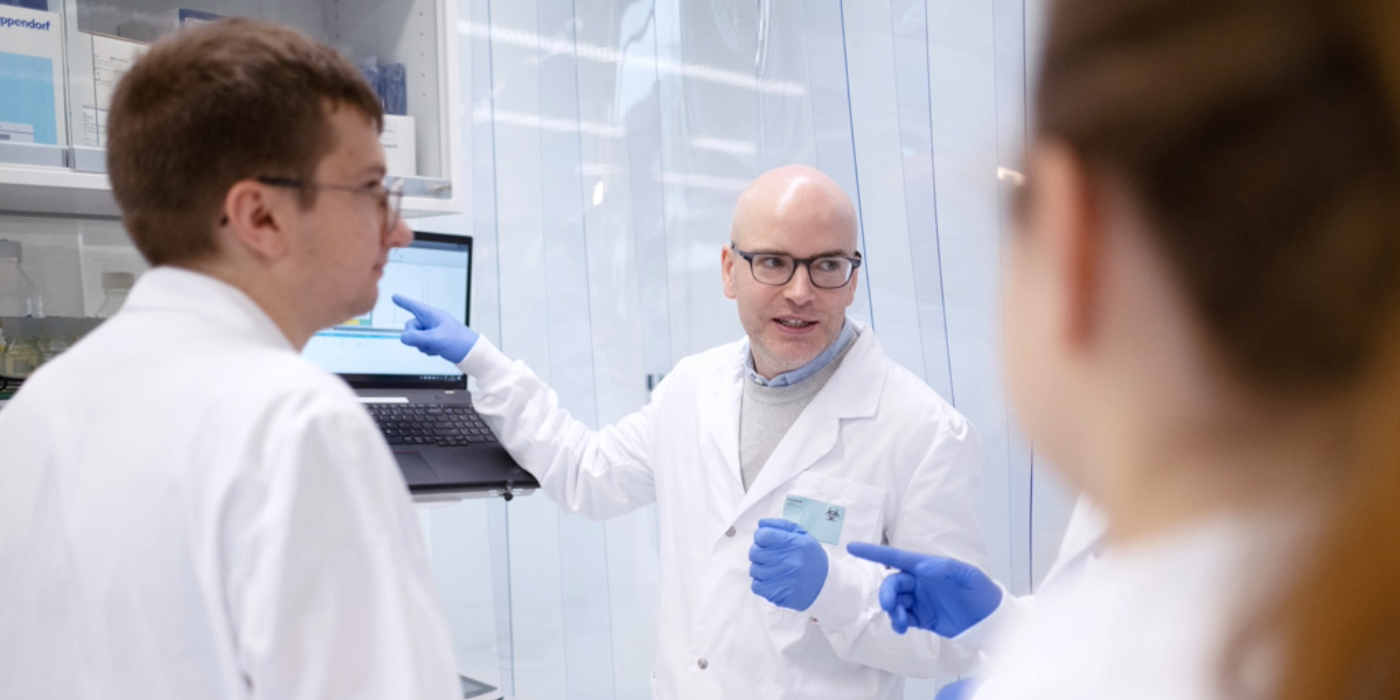
EMBO Practical Course by NCCR AntiResist
NCCR AntiResist will hold an EMBO Practical Course from 6-13 September 2026 at the Biozentrum in Basel, and the application portal is now open. The link to apply is below.
EMBO Practical Courses provide training in new techniques for researchers and core facility staff, enabling them to implement the techniques in their laboratories. The courses last between five and ten days and are limited to 25 participants.
The title of the course is “Human in vitro models to study infection and treatment”. This experimental course will feature novel human-based models for research in human infections. Theoretical and practical training will introduce a range of in vitro infection models, from axenic systems to complex human tissue-based models. Such in vitro models have the potential to transform infection research and drug discovery by bridging the gap between in vitro studies, preclinical validation, and clinical application. Participants will explore the latest developments in microfluidics for real-time infection tracking and drug regimen testing under physiologically relevant PK/PD conditions, and gain hands-on experience across clinical, biological, and engineering disciplines. The schedule includes lectures from experts in human infections and engineering, student presentations, poster sessions, and networking opportunities. This course will equip participants with a broad understanding of design and applications of advanced infection models for antimicrobial research.
Studies of human infections have long been limited by a lack of physiologically relevant models that mimic human disease conditions. Recent advances in bioengineering, microfluidics, and stem cell technologies—utilising primary or induced pluripotent stem cells—have led to the development of human tissue models that more faithfully replicate the structure, function, and microenvironment of infection sites, providing experimental tools to dissect infection and treatment. Such models—ranging from organoids to microphysiological systems—mimic complex physiological processes like ureteral peristalsis or lung mucociliary clearance, allowing precise spatiotemporal tracking of infections. As such, they provide powerful experimental platforms to investigate host–pathogen interactions and evaluate treatment strategies, effectively bridging the gap between in vitro experiments, animal studies, and clinical applications.
To implement these models, researchers need standardised protocols, technical expertise, and an understanding of their potential and limitations. This course provides theoretical and hands-on training in different infection models—from axenic systems to complex tissues and human-based models. By integrating perspectives from clinicians, engineers and infection biologists, it highlights the strength of interdisciplinary approaches. By spearheading infection models from droplet-based systems to human tissue models, the course aims to drive innovation, foster partnerships, and accelerate progress in infection research and therapy.
The practical component of the course will be delivered over four hands-on sessions, providing participants with both theoretical background and practical experience using a range of in vitro infection models—from simple axenic systems to complex tissue- and patient-derived models. Session 1 spanning over two days includes two experimental modules focused on axenic models. Session 2 will span over two days, during which participants will work with human bladder and lung tissue models. Session 3 will focus on infected human tissues, including their handling and processing, with an emphasis on imaging analysis. Session 4 will introduce cellular and tissue slice model with tissues obtained from human patients.
Throughout the course, participants will be encouraged to critically evaluate the advantages and limitations of each model system, discuss appropriate controls, and explore how to select the most suitable model for specific research questions. They will also engage with experts from diverse disciplines—including clinicians, engineers, and infectious disease experts—fostering interdisciplinary perspectives and collaborative opportunities.